

Spider Veins on the Face: Causes, Assessment, and Treatment Options
Spider veins on the face, sometimes called thread veins, are one of the more common vein changes people notice, particularly on the cheeks or around the nose.
While they behave differently to spider veins on the legs, understanding why they develop and when assessment is worthwhile can help you make informed decisions about your vein health.
What Are Spider Veins on the Face?
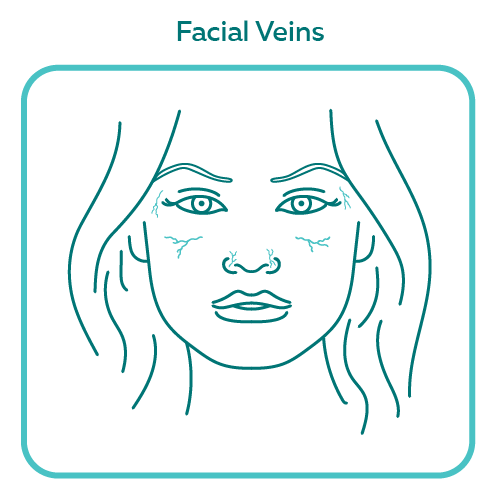
Spider veins on the face are small, visible blood vessels that sit close to the surface of the skin. They often appear as fine red, blue, or purple lines and can form clusters that look like a web.
You may notice:
- Spider veins on the cheek
- Fine lines around the nose
- Thread veins across the face
These veins are like those seen on the legs but tend to be more delicate and visible due to thinner facial skin.
Why Do I Get Spider Veins on My Face?
The most common explanation comes down to changes in how small veins function under the skin.
Facial Spider Veins Causes:
|
Cause |
What Happens in the Skin |
|
Genetics |
Some people naturally have more fragile or visible vessels |
|
Sun exposure |
UV damage weakens vessel walls over time |
|
Hormonal changes |
Can influence blood vessel dilation |
|
Skin conditions |
Conditions like rosacea may increase visible vessels |
|
Environmental factors |
Heat, wind, and temperature changes can dilate veins |
In many cases, facial spider veins develop when tiny vessels become dilated and remain visible, rather than returning to their normal size.
Spider Veins on the Cheek: Why This Area Is Common
The cheeks are one of the most common areas for spider veins to develop.
This is because:
- The skin is thinner and more exposed
- Blood vessels sit closer to the surface
- The area is frequently affected by sun and temperature changes
Over time, repeated dilation of these small vessels can make them permanently visible.
Are Facial Spider Veins Linked to Vein Disease?
Unlike leg veins, facial spider veins are not always associated with deeper vein disease — though assessment remains worthwhile if veins are increasing over time, symptoms are present, or the distribution is widespread or unusual. A clinical review helps determine whether the veins are purely superficial or whether further investigation is warranted.
How Are Spider Veins on the Face Assesed?
A personalised assessment is the first step in understanding the most suitable approach.
In some cases, duplex ultrasound may be used, especially if there’s any uncertainty about underlying vein function or when planning treatment.
Ultrasound allows clinicians to:
- Assess blood flow
- Identify any deeper contributing veins
- Guide treatment where clinically appropriate
This ensures a targeted and safe approach to managing facial veins.
What to Expect From Assessment and treatment
Facial vein management isn’t a one-size-fits-all process. The approach is tailored to each individual based on the type, location, and pattern of veins, as well as any underlying contributing factors identified during assessment.
If treatment is clinically indicated, it is typically delivered in stages, with your doctor reviewing progress and adjusting the approach based on your response. The size and depth of the veins, your skin type, and any underlying factors will all influence how your treatment pathway is structured.
Understanding Your Facial Veins
Facial spider veins are common and often influenced by a combination of genetics, sun exposure, and natural changes in the skin over time. While they are usually harmless, understanding why they develop can help guide appropriate assessment and, where relevant, treatment decisions.
If you’ve noticed new or increasing thread veins on your face, the first step is a consultation with one of our vein doctors. From there, if further assessment or treatment is clinically indicated, your doctor will guide you through the most suitable pathway for your individual situation.