Athletes and Varicose Veins: Training Hard and the Vein Risks Worth Knowing
At Vein Doctors Group, we often see active people who are surprised to notice prominent veins in their legs. Runners, cyclists, gym-goers and strength athletes can all develop visible veins, which naturally raises the question: can exercise cause varicose veins?
In most cases, exercise is beneficial for circulation. Movement activates the calf muscles and helps move blood from the legs back towards the heart. Long periods of sitting, standing or inactivity are more commonly associated with venous problems.
However, being fit does not necessarily mean your veins are functioning normally. Genetics and other individual factors can still affect the valves inside your veins.
It is also important to remember that visible veins are not always varicose veins.
Understanding the difference can help you know when prominent veins are simply part of an athletic physique and when symptoms may be worth discussing with a doctor.
Why exercise is generally good for your veins
Blood travelling through the veins in your legs needs to move against gravity to return to your heart.
Your calf muscles play an important role in this process. When they contract during walking, running or other movement, they help compress the veins and push blood upwards. Small one-way valves inside the veins help prevent blood from flowing backwards.
This is one reason regular movement supports healthy venous circulation.
Varicose veins develop when veins become dysfunctional and blood begins to flow backwards, known as venous reflux. Over time, increased pressure can cause affected veins to enlarge, twist or bulge.
Why can athletes still develop varicose veins?
Regular training does not remove the underlying factors that can contribute to vein disease.
Genetic predisposition is one of the primary influences in the development of abnormal veins. Other recognised factors include ageing, prolonged sitting or standing, immobility, obesity and previous leg injuries.
This means someone can be lean, active and physically strong while still developing problems with their veins.
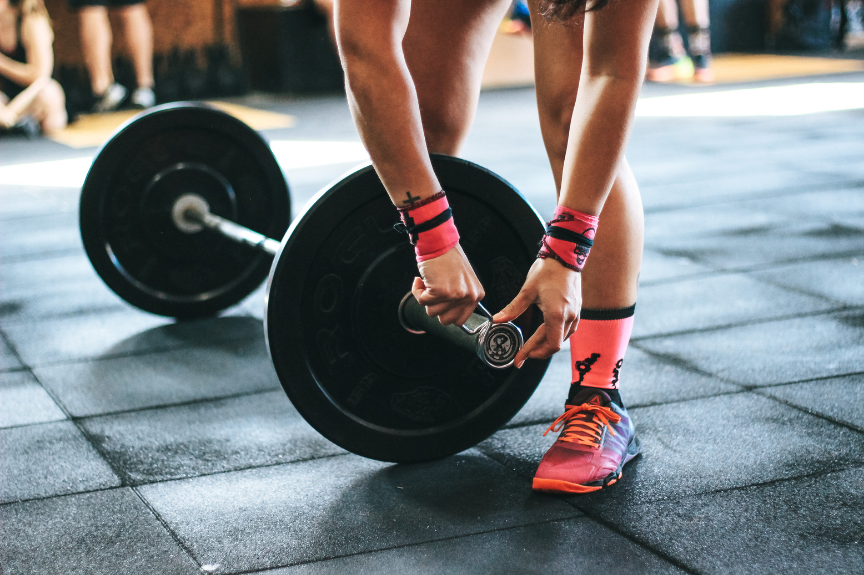
Certain training patterns can also place different demands on the body. Endurance sports involve repetitive activity over long periods, while heavy strength training can involve significant bracing.
That does not mean these activities directly cause varicose veins. However, if you regularly notice heaviness, aching or swelling during or after training, we recommend paying attention to those symptoms rather than assuming they are simply part of being active.
Visible athletic veins vs varicose veins
Prominent veins are common in fit people, particularly those with lower body fat. Veins can become more noticeable during exercise or hot weather.
A visible vein is therefore not automatically a diseased vein.
Varicose veins are associated with dysfunction within the venous system. They may appear dark blue or purple, enlarged, twisted or bulging beneath the skin.
Symptoms that may indicate an underlying venous problem include:
- heavy or aching legs
- burning or itching
- night cramps or restless legs
- swelling in the legs or around the ankles
- skin discolouration or rashes
- enlarged, twisted or bulging veins.
We cannot reliably tell how the valves inside a vein are functioning just by looking at the surface. When symptoms are present, a clinical assessment can help determine what is happening beneath the skin.
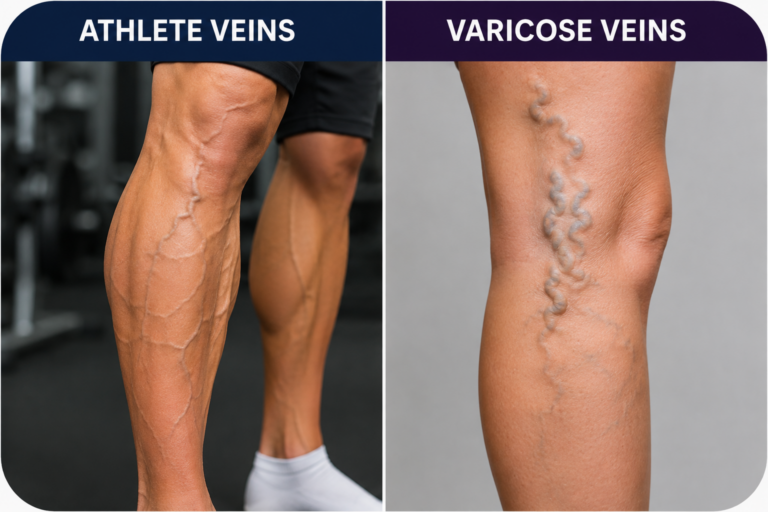
This is an illustrative image only and is not intended for diagnosis. Vein appearance can vary between individuals, and visible veins after exercise do not necessarily indicate vein disease. If you have concerns about prominent veins or symptoms such as aching, heaviness or swelling, seek an appropriate medical assessment.
Supporting your veins while staying active
If you are concerned about your veins, it does not necessarily mean you need to stop exercising.
We generally encourage people to remain active, while also taking practical steps to support circulation.
Keep moving throughout the day
If you spend long periods sitting or standing outside training, try to break them up with regular movement or walking.
Vary your training
Depending on your goals, lower-impact activities such as swimming or easy cycling can complement higher-impact or heavier sessions.
Use appropriate lifting technique
Good breathing and lifting technique are important. If heavy lifting consistently triggers leg symptoms, discuss this with an appropriately qualified health professional.
Stay hydrated
Hydration is an important part of general health and exercise, particularly when training in hot conditions.
Ask whether compression is appropriate
Graduated compression stockings apply external pressure to the legs and are designed to assist blood flow back towards the heart. At Vein Doctors Group, we use compression stockings in the management of symptoms associated with venous disorders and around some vein treatments.
Compression can help manage symptoms for some people, but it does not necessarily address the underlying cause of venous reflux.
When leg symptoms may be more than training soreness
Athletes are used to tired muscles, stiffness and post-training discomfort. That can sometimes make it difficult to recognise when symptoms may be related to something other than muscle recovery.
We recommend considering a medical assessment if you experience:
- persistent or recurring leg heaviness or aching
- ongoing leg or ankle swelling
- increasingly prominent, twisted or bulging veins
- itching or burning around visible veins
- skin changes around the lower legs
- symptoms that regularly interfere with training or everyday activities.
Leg swelling can have several possible causes, including venous insufficiency and deep vein thrombosis (DVT), as well as conditions unrelated to the veins.
Sudden painful swelling in one leg, chest pain, coughing up blood or difficulty breathing requires urgent medical attention.
How we assess varicose veins
Where clinically appropriate, duplex ultrasound is an important first step in investigating possible venous problems.
Rather than relying on how a vein looks from the outside, ultrasound allows us to assess the veins beneath the skin and the direction of blood flow.
At Vein Doctors Group, we use ultrasound imaging during vein assessment to examine deeper and superficial veins and help inform an individual treatment plan.
Australian Ultrasound Specialists also provides chronic venous insufficiency mapping and DVT investigations in support of our clinics.
What happens if venous reflux is found?
Finding venous reflux does not automatically mean you need treatment.
We consider your symptoms, ultrasound findings, medical history and individual circumstances before discussing whether treatment may be appropriate.
Depending on the veins involved, options available at Vein Doctors Group may include:
- Ultrasound-Guided Sclerotherapy (UGS) for appropriate deeper refluxing veins
- Endovenous Laser Ablation (EVLA) for certain larger abnormal veins
- Radiofrequency Ablation (RF) for appropriate larger veins
- Microsclerotherapy for smaller superficial and spider veins.
The appropriate approach, if treatment is needed, depends on the underlying vein problem rather than appearance alone.
If you would like more information on treatments. Visit our treatments page.
The takeaway for active people
At Vein Doctors Group, we want active people to know that prominent veins do not automatically mean there is a problem.
Exercise generally supports circulation, and visible veins can be common in lean and athletic people. What matters more is whether you are also experiencing symptoms such as recurring heaviness, aching, swelling or changes to the skin.
If those symptoms are becoming part of your training routine, it may be worth having them assessed rather than simply training through them.
Our approach is to understand what is happening beneath the skin first. Where clinically appropriate, duplex ultrasound can help identify venous reflux or other vascular issues and guide the next steps based on your individual findings.
Concerned about varicose veins or recurring leg symptoms? Speak with the Vein Doctors Group team about an assessment or book in to see one of our doctors.
This article provides general information only and is not a substitute for individual medical advice. Please speak with a qualified health practitioner about your own symptoms and circumstances.