Sock Marks on Your Legs: What's Normal and What's Not?
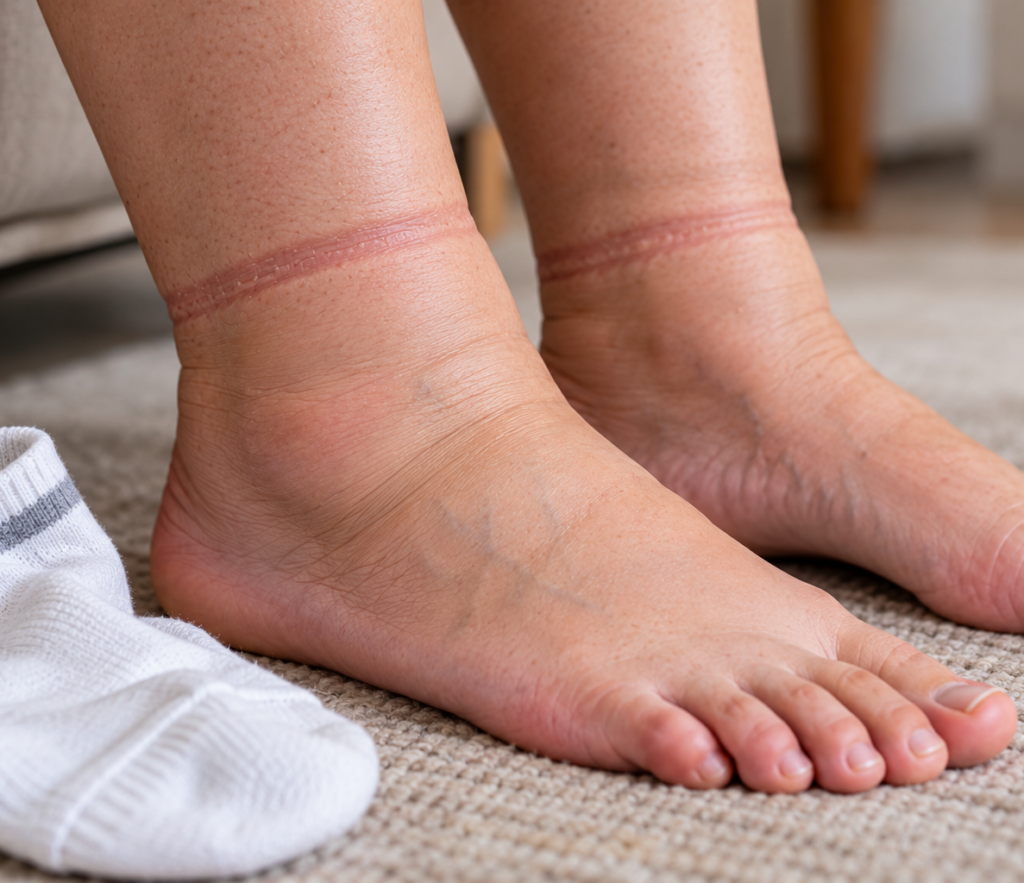
It’s quite common to notice marks around your ankles after taking off your socks at the end of the day. These indentations are usually nothing to worry about. However, deeper or more noticeable sock marks on your legs can sometimes be linked to swelling or an underlying vein condition.
Understanding why these marks appear, and when they might need attention, can help you recognise what’s normal and when it may be worth getting your legs checked.
Why Do Socks Leave Marks on Your Legs?
It’s common for socks to leave marks around your ankles, particularly after a long day. These indentations are usually harmless and tend to fade naturally once your socks are removed.
However, deeper or more persistent sock marks may sometimes indicate fluid retention in the lower legs, known as oedema (swelling). In some cases, this swelling may be associated with an underlying vein condition.
When Are Sock Marks Normal?
Temporary sock indentations are generally not a cause for concern, particularly if the marks fade after removing your socks, there’s no swelling or pain, the legs look normal throughout the day and the marks are consistent with the pressure of your socks.
Tight socks can leave deeper marks, even in people without circulation problems.

When Could Sock Marks Indicate a Problem?
1. Prolonged Sitting or Standing
Spending long periods sitting at a desk or standing at work can contribute to fluid accumulating around your ankles. This may make sock indentations more noticeable towards the end of the day, particularly in warm weather.
2. Chronic Venous Insufficiency
Chronic venous insufficiency occurs when the veins in your legs have difficulty returning blood efficiently towards your heart.
When the small valves inside the veins aren’t functioning effectively, blood can flow backwards and increase pressure within the veins. This may contribute to fluid leaking into surrounding tissues, causing swelling.
Other possible symptoms include:
Heavy or aching legs
Swollen ankles, particularly in the evening
Itching or skin changes around the lower legs
Discomfort after prolonged standing
Importantly, vein problems can sometimes occur without obvious visible varicose veins
3. Fluid Retention and Other Medical Conditions
Sock marks may also become more noticeable due to fluid retention associated with certain medications, hormonal changes or other medical conditions. Heart, kidney and lymphatic conditions can also contribute to leg swelling.
Because swelling can have several causes, sock marks alone cannot determine whether you have a vein condition.
What Is Pitting Oedema?
Pitting oedema is a type of swelling where pressing gently on the skin leaves a temporary indentation. It commonly affects the feet, ankles or lower legs and may occur when excess fluid accumulates in the tissues. Although deep sock marks can sometimes accompany pitting oedema, they are not enough to diagnose it.
What Can Help Reduce Sock Marks and Ankle Swelling?
If your sock marks are associated with mild swelling after a long day, a few simple habits may help:
Keep moving: Walking activates your calf muscles and supports blood flow.
Take regular breaks: Avoid sitting or standing still for extended periods.
Elevate your legs: Raising your legs while resting may help reduce temporary swelling.
Choose comfortable socks: Avoid excessively tight elastic bands that leave uncomfortable marks.
Ask about compression stockings: Properly fitted medical compression stockings may help certain venous conditions, but they aren’t suitable for everyone.
These measures may help manage mild symptoms but won’t necessarily address an underlying medical condition.

When Should You Have Your Legs Checked?
Occasional sock marks are common. However, persistent swelling, deep indentations or accompanying leg discomfort may warrant medical assessment.
At Vein Doctors Group, a consultation includes reviewing your symptoms and medical history. When clinically appropriate, a duplex ultrasound can help assess blood flow and investigate possible underlying venous conditions.
If a vein-related problem is identified, your doctor can discuss appropriate management options based on your individual needs.
Frequently Asked Questions:
Are deep sock marks a sign of poor circulation?
Not necessarily. Deep sock marks may result from tight elastic or swelling. In some cases, venous insufficiency may contribute, but other causes should also be considered.
Why are my sock marks worse at night?
After a day of sitting or standing, fluid may accumulate in the lower legs, making sock indentations more noticeable in the evening.
Can you have swollen ankles without varicose veins?
Yes. Ankle swelling can occur without visible varicose veins and may have venous or non-venous causes.
Understanding What Your Sock Marks May Mean
Most sock marks are simply the result of elastic pressing against your skin. However, recurring deep indentations alongside swollen, heavy or aching legs may indicate that further investigation is worthwhile.
Vein Doctors Group can help assess whether an underlying vein condition may be contributing to your symptoms.
To learn more or arrange a consultation, visit Vein Doctors Group or call 1800 483 467.